
-
Why Does Quantum Mechanics Seem So “Strange”? Superposition and Measurement Explained with 7 Simple Analogies
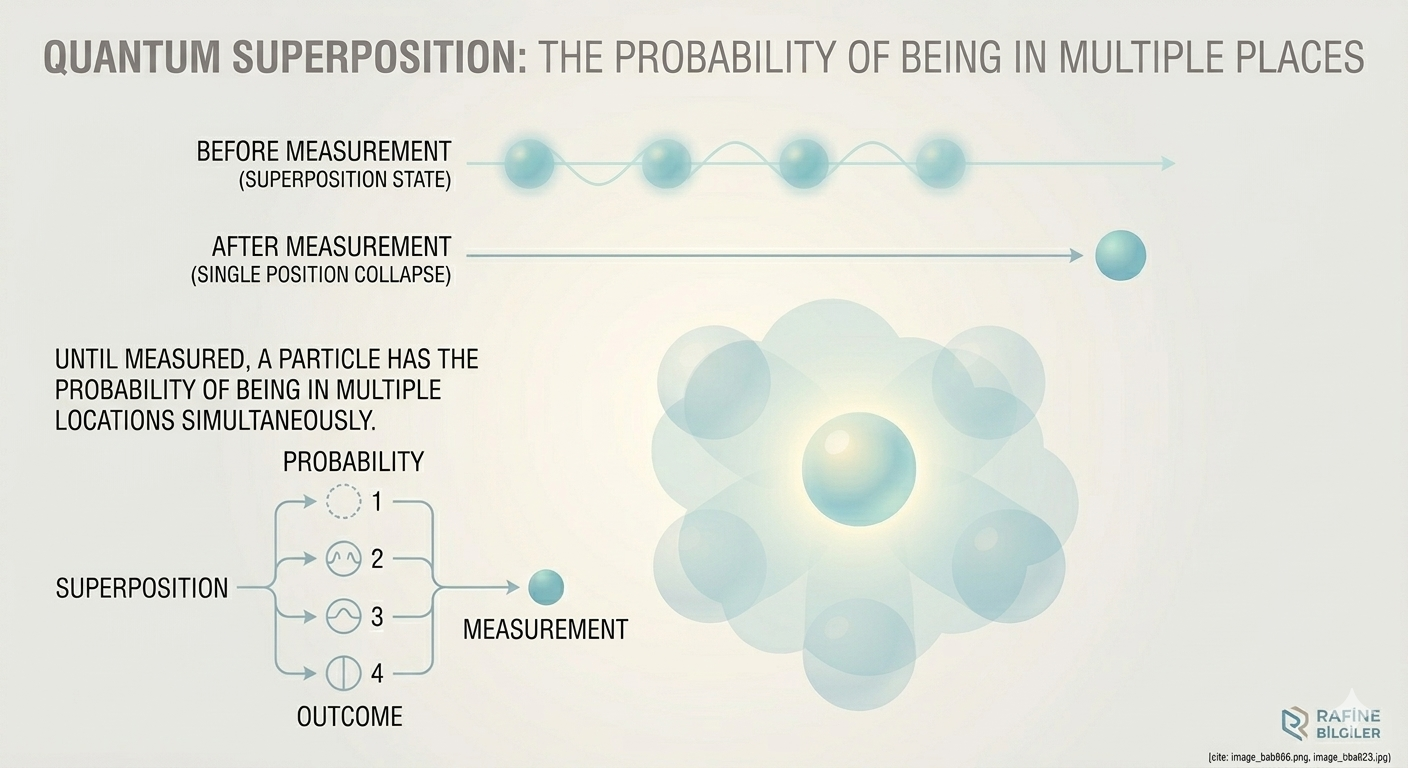
Quantum mechanics is one of the most powerful branches of modern physics, but it is also one of the hardest to grasp intuitively. The reason is simple: the quantum world does not behave the way our everyday experience teaches us to expect. In daily life, objects occupy definite positions, move in familiar ways, and seem…
-
Understanding How Processors and Transistors Perform Logical Operations
Today, we will delve into the working principles of processors and explore how microcontrollers use transistors to perform logical operations. Along the way, we’ll build logic circuits to understand the fundamental functions of transistors. Finally, we’ll design an adder circuit capable of adding two 8-bit numbers to consolidate our understanding. Processors are often described…
-
The Fundamentals of the Brain’s Extraordinary Mechanism
The human brain’s working system is a miraculously designed, complex, and fascinating structure. In just one cubic millimeter of the brain, there are 4 kilometers of neural pathways. Across the entire brain, the total length of these pathways reaches an incredible scale, considering the brain’s size. Moreover, within this dense and intricate system, no…
-
Fundamentals of Quantum Mechanics
When learning quantum mechanics, it is crucial to have a strong understanding of fundamental mathematical concepts such as vector spaces, linear algebra, eigenvectors, and operators. These concepts form the mathematical foundation of quantum mechanics. Among these, the Schrödinger equation is one of the most fundamental elements of quantum mechanics. The Schrödinger equation is a…
-
What is Glass?
Glass, whose primary material is sand, is one of the materials widely used in daily life for various functional purposes. Sand, used in the production of glass, is among the most abundant substances found in nature. The most significant and unique feature of glass is its transparency. So, what is glass? In the simplest…
-
The Evolution of Automatic Transmissions
Initially, automatic transmissions were considered a luxury due to the comfort they provided and their higher cost. Today, while manual models are still preferred as a more economical alternative, vehicles equipped with automatic transmissions have become quite common. Now more accessible, this type of transmission was first developed in 1921 by steam engineer Alfred…
-
How Do Air Conditioners Work?
How Do Air Conditioners Cool?Air conditioners utilize the evaporation and condensation properties of R22 or R410 gas to expel heat from the environment. In split air conditioners, the gas passing through the indoor unit absorbs the heat in the environment and evaporates. This process cools the environment. The evaporated R22 gas reaches the outdoor…
-
how does a calculator work ?
Calculators are indispensable tools in our daily lives, performing instantaneous calculations with remarkable speed. This efficiency is largely attributed to advancements in electrical engineering. However, early calculators were far simpler, relying solely on mechanical components.The abacus, often considered the first calculator and computer, enabled users to perform basic arithmetic manually. In subsequent centuries, devices…
-
What is Digital Communication?
With the advancement of communication technologies, modern digital communication systems have replaced analog modulation-based systems. Digital communication systems offer significant advantages over analog systems, including: Pulse Modulation Power Efficiency: In pulse modulation, the transmitted power is concentrated into short pulses, unlike the continuous transmission in analog modulation. Multiplexing Capability: The gaps between pulses can…
-
Analog Communication Explained in a Comprehensive Manner
Communication:The exchange of meaningful information is defined as communication (Exchanging Information). In today’s world, the development of internet communication and electronic media has given the concept of communication a global meaning, turning it into “global exchanging of information.” Communication has technical, economic, social, and cultural dimensions. To achieve full, uninterrupted, and 100% communication, barriers to…