
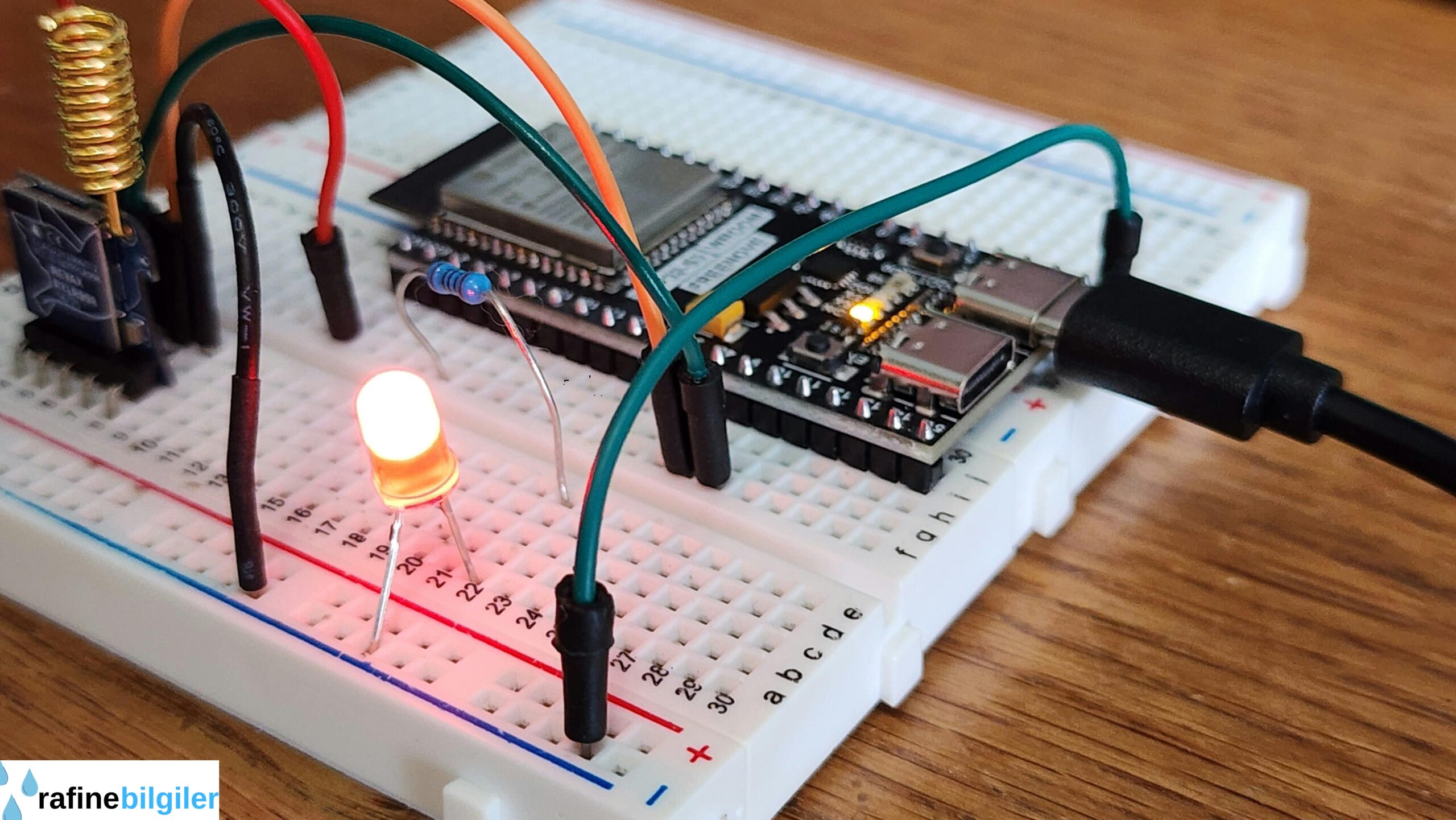
If you are starting an IoT or embedded project, one of the first decisions you may face is whether to use the ESP32 or the ESP8266. At first glance, these two microcontrollers look very similar. Both are affordable, both support Wi-Fi, and both are popular among hobbyists, students, and engineers. However, in practice, they are not equal.
Choosing the wrong board does not always ruin a project, but it can make development slower, limit future upgrades, or create unnecessary hardware problems. For this reason, it is better to understand their differences before building your system.
In this article, we will compare the ESP32 and ESP8266 in a practical way. Instead of only listing specifications, we will focus on where each board performs better, where it falls short, and which one makes more sense for real project scenarios.
What Are ESP32 and ESP8266?
The ESP8266 and ESP32 are low-cost microcontrollers developed for wireless communication and embedded applications. Both are widely used in smart home systems, sensor monitoring, data logging, remote control systems, and many other IoT projects.
The ESP8266 became popular earlier because it offered Wi-Fi at a very low cost. Before it appeared, adding wireless communication to a microcontroller project was usually more expensive and more complicated. The ESP8266 changed that.
The ESP32 came later as a more advanced version. It keeps the low-cost philosophy but adds more processing power, more peripherals, Bluetooth support, and better flexibility for larger systems.
In simple terms:
- ESP8266 is the simpler and cheaper option.
- ESP32 is the more powerful and more capable option.
Quick Comparison Table
| Feature | ESP8266 | ESP32 |
|---|---|---|
| Wi-Fi | Yes | Yes |
| Bluetooth | No | Yes |
| CPU power | Lower | Higher |
| Number of GPIO pins | Fewer | More |
| ADC quality | Basic | Better |
| PWM / peripheral options | Limited | More advanced |
| Multi-tasking capability | Limited | Better |
| Power efficiency options | Good | Better in advanced designs |
| Cost | Lower | Slightly higher |
This table gives a fast overview, but the real decision depends on your project goals.
Processing Power: ESP32 Clearly Wins
One of the biggest differences between these boards is performance.
The ESP8266 is enough for many simple tasks. It can read sensor data, host a small web server, send data to cloud platforms, and control relays or LEDs without much trouble. If your project is small and direct, the ESP8266 usually performs well.
The ESP32, however, offers much more headroom. It is better when your project needs to do multiple things at the same time. For example, if you want to read sensors, process data, run a web interface, and maintain wireless communication together, the ESP32 handles this more comfortably.
This does not mean every project needs an ESP32. It simply means the ESP32 gives you more space for future expansion.
Wi-Fi Is Present on Both, but ESP32 Adds Bluetooth
Both boards support Wi-Fi, so either one can connect to your router, send data to a server, or host a local webpage.
The key difference is Bluetooth.
The ESP8266 does not include Bluetooth. If your project only needs Wi-Fi, that is not a problem. But if you want your device to communicate with a phone directly, use BLE-based sensors, or build a short-range wireless control system, the ESP32 becomes much more attractive.
In many modern projects, Bluetooth is not required at the beginning but becomes useful later. That is why many developers choose the ESP32 even for projects that currently only use Wi-Fi.
GPIO and Peripheral Flexibility
If your project needs only a few inputs and outputs, the ESP8266 may be enough. But when the number of sensors, actuators, or communication modules increases, the ESP32 becomes the safer choice.
The ESP32 generally offers:
- More GPIO pins
- Better PWM control
- More UART, SPI, and I2C flexibility
- Better support for multiple peripherals at the same time
This matters in real designs. A beginner may think a few pins are enough, but later they may want to add an OLED display, an extra sensor, a buzzer, or a relay module. Suddenly, the design becomes tight.
With the ESP32, that problem happens less often.
Analog Reading: ESP32 Is Usually Better
Many projects involve analog sensors such as gas sensors, light sensors, moisture sensors, or potentiometers. In these cases, analog-to-digital conversion matters.
The ESP8266 can read analog values, but its analog capability is limited. In many boards, there is only one ADC input, and the reading range is not very flexible.
The ESP32 is better suited for analog work because it provides more ADC channels and more options. It is not perfect, and analog accuracy still depends on circuit design, grounding, noise, and calibration, but it is usually the better choice when your project relies on several analog sensors.
Power Consumption: The Real Answer Is More Complicated
Many people ask which board consumes less power. The simple answer is that both can be used in low-power systems, but the real result depends on how you design the project.
If you only compare the chips in an ideal way, both can use sleep modes. However, in real life, power consumption is affected by:
- The board version you use
- Voltage regulators
- USB-to-serial chips
- Sensor modules connected to the board
- Wi-Fi usage frequency
- Sleep and wake-up strategy
For battery-powered projects, the ESP32 can be excellent if you use its sleep modes correctly. But a poorly chosen ESP32 development board may still waste power. The same is true for ESP8266 boards.
So, for low-power projects, the board selection is not just about ESP32 vs ESP8266. It is also about the hardware design around them.
Development Experience and Community Support
The ESP8266 has been used for years in hobby and DIY projects, so there are many tutorials, examples, and community answers available. It is beginner-friendly in the sense that many classic IoT examples were built around it.
The ESP32 also has a very strong community, and today its support is excellent. In fact, many new projects, libraries, and examples now focus more on the ESP32 than the ESP8266.
If you use Arduino IDE, PlatformIO, or ESP-IDF, both are accessible. But for long-term learning and advanced applications, the ESP32 gives you more opportunities.
Real Project Scenarios
The best way to decide is to think in terms of actual projects.
1. Simple Temperature and Humidity Monitor
If your goal is to read a DHT11 or DHT22 sensor and send data to a webpage or cloud dashboard, the ESP8266 is usually enough.
This kind of project is simple, low-cost, and does not require many pins or high processing power.
Better choice: ESP8266
2. Smart Home Control Panel
Suppose you want to control relays, read multiple sensors, display values on a screen, and maybe connect to a mobile app. This system becomes more complex very quickly.
In that case, more GPIO pins and better performance matter.
Better choice: ESP32
3. BLE-Based Mobile Device Control
If your project needs Bluetooth communication with a phone, the ESP8266 is automatically out of the race.
Better choice: ESP32
4. Battery-Powered Sensor Node
If the project only wakes up occasionally, reads one or two sensors, sends data, and goes back to sleep, both can be used.
If the design is extremely simple and budget matters, the ESP8266 can still make sense. If you want more flexibility, better future expansion, or more advanced low-power strategies, the ESP32 is more attractive.
Better choice: Depends on simplicity vs flexibility
5. Learning Platform for Future IoT Projects
If you are learning and want one board that can support many different future ideas, the ESP32 is usually the smarter investment.
Better choice: ESP32
When the ESP8266 Still Makes Sense
Some people assume the ESP8266 is obsolete. That is not true.
It still makes sense when:
- Your project is very simple
- Cost is the main concern
- You only need Wi-Fi
- You need just a few GPIOs
- You are reusing old designs or existing modules
- You want a straightforward and lightweight solution
For example, a simple Wi-Fi relay switch or a basic sensor uploader can still work very well with an ESP8266.
When You Should Choose the ESP32 Without Hesitating
The ESP32 is the safer choice when:
- You may expand the project later
- You need Bluetooth
- You need multiple sensors or outputs
- You want better analog capability
- You want stronger processing power
- You are designing a system that may become more advanced over time
In many cases, the extra cost is small enough that choosing the ESP32 saves time and future redesign work.
Common Beginner Mistakes
There are several common mistakes people make when choosing between these two boards.
Thinking Only About Today’s Requirements
A project that seems simple at the beginning often grows. People start with one sensor, then add a display, then add mobile control, then add data logging. If the platform is already at its limit, expansion becomes difficult.
Ignoring Power Design
Power problems are very common in Wi-Fi boards. Resets, unstable behavior, and failed boot issues often come from weak power supplies, bad USB cables, or poor regulator choices rather than from the chip itself.
Confusing Development Boards with Bare Chips
Different boards based on the same chip can behave differently in practice because of layout, regulator quality, or extra components.
Assuming More Powerful Always Means Better
Sometimes the ESP32 is unnecessary. If the application is extremely simple, the ESP8266 can still be the cleaner and cheaper option.
Final Verdict
If your project is basic, low-cost, and Wi-Fi-only, the ESP8266 is still a useful microcontroller.
If your project is expected to grow, needs more pins, requires Bluetooth, or involves multiple functions working together, the ESP32 is the better long-term choice.
So the practical conclusion is simple:
- Choose ESP8266 for small, focused, budget-sensitive tasks.
- Choose ESP32 for flexibility, performance, and future-proof design.
In most modern IoT projects, the ESP32 is the safer default choice. But the right decision always depends on what your project actually needs, not on which board is newer or more popular.